
The Gulf of Saint-Tropez is committed to more responsible tourism that respects the environment, cultural heritage, and the quality of life of its residents. Working alongside tourism professionals engaged in certification and accreditation initiatives—notably through labels and brands such as Destination d’Excellence, Clef Verte, Vignobles & Découvertes, Qualité Tourisme, and Tourisme & Handicap—and all local stakeholders, the Community Tourism Office works to promote sustainable and balanced tourism development.
The preservation of natural and marine areas, the promotion of local skills, sustainable transport and raising visitors’ awareness are among the initiatives being undertaken to build, together, an attractive, authentic and forward-looking destination.

The OTC’s Commitments
Over the years, the Community Tourist Office has successfully professionalised its operations, developed its expertise and enhanced the quality of its services. Its Category II classification, achieved in 2020 and renewed in 2025, followed by its AFNOR certification for the classification of holiday accommodation in 2024, are testament to this ongoing commitment to improvement and excellence.
Today, our ambition is to achieve Category I classification and the ‘Destination of Excellence’ label.
These nationally recognised distinctions will serve to recognise the quality of our organisation, our hospitality and our services, whilst reaffirming our commitment to responsible and sustainable tourism.
The region’s commitments
For several years now, the Community of Communes of the Gulf of Saint-Tropez has been committed to coordinating the energy transition through the Territorial Climate, Air and Energy Plan, as well as to driving internal improvements through the ‘Territory Committed to Ecological Transition’ programme.
The Territorial Climate, Air and Energy Plan (PCAET)
What is a PCAET?
It is a strategic and operational plan. It stems from the Energy Transition for Green Growth Act (LTECV) of 17 August 2015.
It is mandatory for public inter-municipal cooperation bodies with their own tax-raising powers and a population of over 20,000.
This applies to the Community of Communes of the Gulf of Saint-Tropez, which adopted it in February 2020.
Its aims?
- Reducing energy consumption through behavioural change
- Developing renewable energy
- Reducing greenhouse gas emissions
- Improving air quality
- Adapting to climate change
The PCAET is currently being revised in order to refine the region’s climate, air and energy strategy.
A region committed to the ecological transition (TETE)
The TETE programme is a voluntary initiative led by the French Environment and Energy Management Agency (ADEME). It takes the form of a guide to best practice on climate, air and energy, enabling the local authority to implement a structured transformation. By following a specific framework, shared by more than 400 local authorities in France, the Gulf of Saint-Tropez has embarked on a process of continuous improvement, with the long-term aim of progressing through the certification scheme.
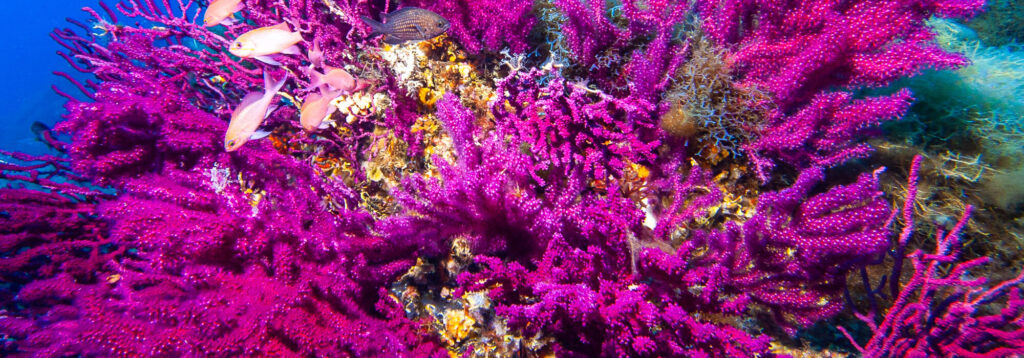
To discover the rich marine flora and fauna and the coastal protection measures in place, visit the Gulf of Saint-Tropez Marine Protected Area.

Because high-quality tourism also depends on the commitment of our local stakeholders, discover the labels that promote our destination as well as the committed service providers.